
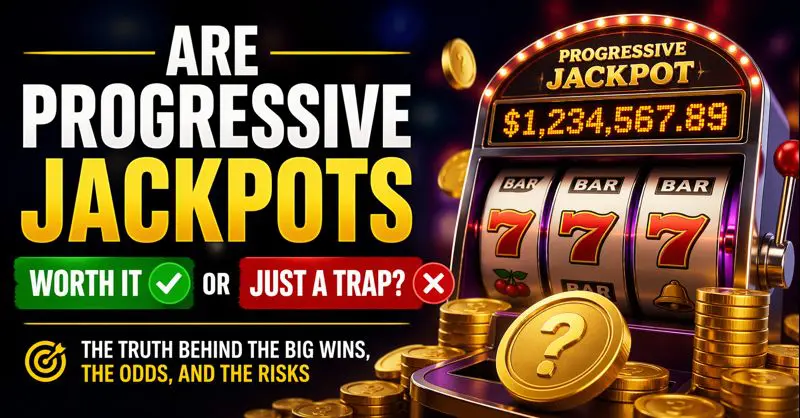
Walk through any casino, physical or online, and the loudest promise in the room is usually a progressive jackpot. The number keeps climbing, the graphics get flashier, and the idea digs in fast: one spin could change your life. I get why that works. I have sat next to people feeding a machine with that glassy mix of hope and stubbornness, convinced the jackpot looked “ready.” That feeling is real. The logic behind it is usually not.
A progressive jackpot is simple on paper. A small slice of each bet goes into a prize pool. Sometimes that pool belongs to one machine. Sometimes it links dozens, hundreds, or even thousands of games across a network. That is how you end up with giant top prizes that dwarf regular slot payouts. The catch is that money has to come from somewhere, and a lot of the time it comes from the overall value given back to ordinary players.
That is where the question gets interesting. Are progressive jackpots worth it? Sometimes, for a very specific kind of player. For most people, they are expensive entertainment dressed up as a smart shot.
Why the jackpot looks so irresistible
The appeal is not just the money. It is the story attached to it. A regular slot might offer steady smaller wins, but a progressive slot sells a fantasy. The number is visible. It grows in real time. It feels close, personal, almost chosen. You are not just gambling on a result. You are gambling on an event.
Casinos understand this better than most players do. A giant jackpot changes how people think about odds. If a machine offers a top prize of $2 million, many players stop asking the question that matters most: what are my chances, and what am I giving up for that chance? They start thinking like lottery buyers. A tiny probability begins to feel acceptable because the dream is so large.
There is also a common misconception that a jackpot must hit once it gets high enough. Players talk about a prize being “due” after a long dry stretch. That is classic gambler’s fallacy. Slot machines run on random number generator systems, so each spin is independent. A jackpot that has not hit in months is not more likely to hit on your spin just because it feels overdue.
What you usually sacrifice to chase the big number
Most progressive slots have higher volatility than standard games. In plain English, that means longer stretches of dead spins or small returns, with a tiny chance at a massive payout. Many also have a lower effective return to player than strong non progressive slots. Not always, but often enough that it matters.
Here is the practical version. If you bring $100 to a progressive slot, your bankroll can disappear faster than you expect, especially if the game requires max bet to qualify for the full jackpot. That detail matters more than many players realize. I have seen people sit for an hour betting below the threshold, genuinely believing they were in the running for the headline prize. They were not. They were funding it.
Regular slots, table games, and even some high volatility non progressive games often give you more play time for the same money. If your goal is entertainment, that is a major advantage. If your goal is profit, the edge still belongs to the house, but at least you are not paying an extra premium for a fantasy outcome with microscopic odds.
When a progressive jackpot can actually make sense
This is the part people skip, because “never play them” is too blunt and not quite true. There are moments when a progressive jackpot becomes more reasonable. Some jackpots have trigger points where the growing prize pool pushes the math closer to favorable territory. Skilled advantage players sometimes track those situations. They are not guessing. They are looking at contribution rates, reset values, payout structures, and the probability of hitting the top prize or secondary features.
For an ordinary player, though, that is hard to calculate and even harder to act on with discipline. You need enough bankroll to survive variance, enough knowledge to know which games are worth watching, and enough restraint to walk away when the numbers are bad. Most casual players do not approach progressive jackpots that way. They chase them emotionally.
A progressive can also make sense if you treat it exactly like you would treat a concert ticket or a night out. You set a spending limit, accept that the money is gone, and enjoy the excitement for what it is. That is not an investment mindset. It is entertainment spending with a slim lottery style upside.
The real trap is rarely the machine itself
Calling progressive jackpots a trap is slightly off. The machine is doing what it says it does. The real trap sits in the gap between what players imagine and how the game works.
The common trouble spots usually look like this:
- confusing a huge prize with good value
- assuming a jackpot is due after a long run
- ignoring max bet rules tied to eligibility
- chasing losses because the prize feels close
- playing with a bankroll too small for the volatility
Those mistakes are expensive because they stack. A player who believes the jackpot is due will often bet longer than planned. A player who does not understand volatility will assume the cold streak means a hot run is coming. A player who finally gets a bonus but misses the top prize may double down out of frustration. That is where progressive jackpots become dangerous, especially for people who already struggle with impulse control.
How I would judge one before putting money in
I would look at the game the same way I would judge any risky purchase: not by the headline, but by the conditions. The size of the jackpot matters less than the full package around it. If the base game is miserable, the top prize has to work very hard to justify the cost.
A sensible quick check looks like this:
- read whether the full jackpot needs max bet
- check the game’s RTP and volatility if available
- decide your budget before the first spin
- assume you will not hit the jackpot
- leave when the budget is gone
That last point sounds obvious, but it is where most discipline breaks. The progressive meter creates urgency. It makes stopping feel like quitting right before something important happens. In reality, walking away on time is often the smartest move you make all night.
So, are progressive jackpots worth it or just a trap? They are worth it if you understand the trade off and are honestly paying for excitement. They are a trap if you mistake excitement for value. The life changing win is real. So are the long losing sessions that fund it. Most players remember the first story and ignore the second. The house counts on that.